

What if your financial results are accurate, yet stakeholders still leave unsure what they mean or what to do next? Presenting financial performance to stakeholders isn’t about putting every figure on a slide. It’s about stating the key message, explaining what sits behind the numbers and showing why it matters.
If your reports feel crowded with detail, or a weaker result is hard to explain, you’re not alone. Owners, directors, lenders and teams need different levels of information. Choosing the right measures matters as much as getting the figures right. Consistent bookkeeping and reconciled records give you a dependable starting point, but your presentation also needs to connect results with context.
This guide shows you how to tailor the story to each audience, select measures that support the discussion, explain variances and uncertainty in plain English, and finish with practical decisions and agreed next steps. It also shows how channel-level sales, fees and margins can help eCommerce businesses explain performance without overwhelming the room.
Key Takeaways
- Start with the question stakeholders need answered, then shape the presentation around the decision they need to make.
- Choose a focused set of measures and show how profit, cash flow and the balance sheet each tell a different part of the story.
- Make presenting financial performance to stakeholders clearer by leading with the headline and using evidence to support it.
- Explain a variance through its cause, business impact and planned response to keep discussions open and constructive.
- Close by recording decisions, owners and deadlines, then use stakeholder feedback to improve future reporting.
Presenting financial performance to stakeholders starts with their questions
A useful financial performance presentation explains results, gives them context and shows their implications. Stakeholder financial reporting turns financial information into an explanation that helps each audience understand performance and decide what to do next.
Before preparing slides, identify what the audience needs to know. Are they concerned about profitability, available cash, risk, progress against a plan or the choices ahead? Let that question shape the opening message and supporting detail. This practical presentation supports discussion and decision-making. It does not replace statutory accounts or other required reporting. For an overview of the broader purpose and frameworks, see Financial reporting.
What do stakeholders want to understand from financial results?
Different audiences view the same results through different lenses. Owners and directors may need to know whether the business is profitable, whether it can meet near-term commitments, what risks could affect performance and which choices need attention. Lenders are more likely to focus on cash generation, repayment capacity and existing financial commitments. Employees may need a high-level view of progress, priorities and the organisation’s resilience, without confidential detail that isn’t relevant to their role.
Investors may want to understand performance against expectations and the factors that could influence future plans. Treat these as starting points, not assumptions about every stakeholder. Check the purpose of the meeting and invite people to share questions in advance where appropriate.
How should the presentation change for each audience?
Before preparing slides, map three things: the decisions each audience may make, their familiarity with financial terms and the information they’re entitled to access. Then adjust the detail. Directors may need supporting analysis and a clear view of risks; employees may benefit more from plain-language explanations of overall progress and priorities. Explain unfamiliar terms, and leave out figures that don’t help answer the audience’s question.
Access matters too. Restrict personal information and commercially sensitive details to those with a legitimate need to see them. A useful test is whether each figure helps this audience understand the issue or make a decision. If it doesn’t, leave it out of the main presentation or provide it separately to the appropriate people.
For presenting financial performance to stakeholders, accuracy is only the starting point. A clear purpose, audience-appropriate detail and a direct link to decisions ahead make the results more useful.
Choose financial measures that explain performance, not just activity
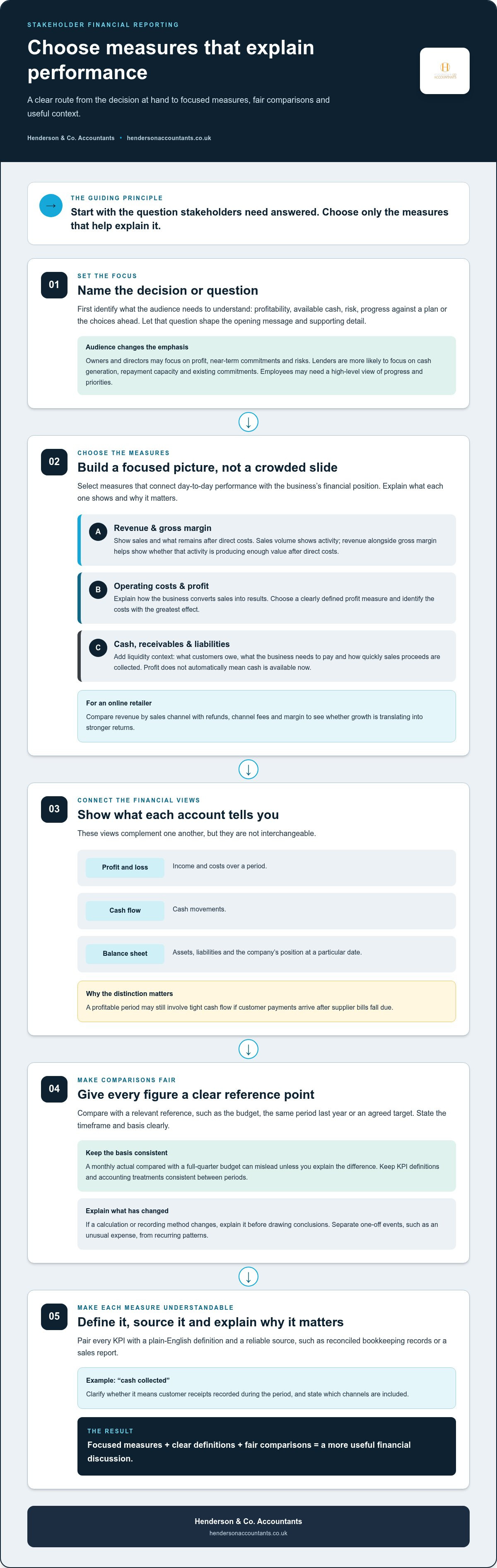
A stakeholder update doesn’t need every figure available. Choose a focused group of measures that answers the audience’s questions, then explain what each one shows and why it matters. Sales volume, for example, shows activity. Revenue alongside gross margin can reveal whether that activity is producing enough value after direct costs.
Which financial performance measures belong in a stakeholder update?
Use measures that connect day-to-day performance with the business’s financial position. The right selection depends on the decision under discussion, but these categories can help you build a clear picture:
- Revenue and gross margin: show sales and how much remains after direct costs. For an online retailer, compare revenue by sales channel with refunds, channel fees and margin to see whether growth is translating into stronger returns.
- Operating costs and profit: explain how the business converts sales into results. Choose a clearly defined profit measure and identify the costs that have had the greatest effect.
- Cash, receivables and liabilities: add liquidity context. Profit doesn’t automatically mean cash is available now, so consider what customers owe, what the business needs to pay and how quickly sales proceeds are collected.
These measures draw on different parts of the accounts. The profit and loss account shows income and costs over a period; the cash flow view shows cash movements; the balance sheet shows assets, liabilities and the company’s position at a particular date. They complement one another, but they aren’t interchangeable. A profitable period may still involve tight cash flow if customer payments arrive after supplier bills fall due.
How can you make comparisons fair and useful?
Give each figure a relevant reference point, such as the budget, the same period last year or an agreed target. State the timeframe and basis clearly. A monthly actual compared with a full-quarter budget can mislead unless you explain the difference.
Keep KPI definitions and accounting treatments consistent between periods. If the calculation or recording method changes, explain what changed before drawing conclusions. Separate one-off events, such as an unusual expense, from recurring patterns rather than suggesting they have the same lasting effect.
Pair every KPI with a plain-English definition and a reliable source, such as reconciled bookkeeping records or a sales report. For example, define whether “cash collected” means customer receipts recorded during the period, and clarify which channels are included. Consistent bookkeeping helps make comparisons dependable. Bookkeeping and reporting support can help provide a sound basis for useful financial discussions.
Build a financial performance presentation around one clear story
A presentation is easier to follow when every slide supports one central message. Link results to context and action so stakeholders can see what happened, why it matters and what decision may follow.
Use this sequence to keep the story focused:
- Purpose: State the reporting period, who the presentation is for and what the discussion needs to achieve.
- Headline: Give the main finding upfront, such as performance being ahead of plan, below expectation or mixed across key areas.
- Evidence: Show only the measures and comparisons that support that finding.
- Explanation: Describe the main factors behind the results and their practical implications.
- Decision: Set out what needs to be agreed, who will take it forward and when progress will be reviewed.
This approach makes presenting financial performance to stakeholders more effective because every figure has a purpose. If operating costs are higher than planned, for example, show the relevant comparison, explain the main driver and clarify whether it affects future plans. Keep detailed supporting schedules available for questions rather than putting every calculation in the main presentation.
What should a financial performance presentation include?
Use the opening slide to orient the audience: name the period covered, state the purpose and give the headline finding in plain English. Follow with the evidence that matters, using clear units, reporting periods and comparisons. Avoid introducing measures that don’t help explain the message. Close by spelling out what the results mean, which decisions are needed and who is accountable for agreed actions.
How can charts make financial results easier to understand?
Choose a visual that fits the point. A trend chart can show how a measure changes over time; a table can make exact comparisons easier to check. Keep each chart focused on one relationship, such as actual results against budget, and label the periods and units directly. Don’t rely on unexplained abbreviations or a colour key the audience has to guess.
Keep slides uncluttered. Use a consistent scale so differences aren’t exaggerated, and add a short caption stating the takeaway. Make the meaning accessible without relying on colour alone: label lines or bars, use clear contrast and include a text description of the key message. The audience should still understand the point if they can’t distinguish the colours or are reading a printed copy.
Before presenting, check that the headline, visual and spoken explanation tell the same story. If a stakeholder needs more detail, use a clearly labelled supporting table rather than crowding the main slide.
Explain variances, risks and uncertainty without losing stakeholder trust
A result below plan can feel uncomfortable to present, but hiding or softening it risks damaging confidence. Transparency builds credibility when you explain what is known, what may have caused the difference and how the business plans to respond. When presenting financial performance to stakeholders, clear explanation matters more than making every result look positive.
How should you explain a financial variance to stakeholders?
Use a consistent sequence: state the difference against budget or the previous period, explain the likely driver, describe the business impact and set out the action taken or proposed. Separate evidence from interpretation. For example, “orders fell below plan” is a reported result; “a campaign change may have contributed” is a possible explanation unless further analysis confirms it.
A simple table can make that distinction clear:
| Measure | Plan | Actual | Variance | Explanation |
|---|---|---|---|---|
| Channel sales | Budgeted level | Recorded level | Below plan | Fewer orders recorded; review channel activity and update the outlook |
Use actual figures from your records in a live presentation, and make the comparison period clear. Keep explanations proportionate: identify the most material differences rather than listing every small movement. If the cause is still being investigated, say so and explain when or how it will be reviewed.
How can you present risk and uncertainty responsibly?
Make the status of each statement clear. Confirmed results come from recorded performance; estimates rely on available information; forecasts depend on assumptions about what may happen next. Don’t present a forecast as a result already achieved.
For each important assumption, explain what could change it and how that might affect the outlook. An eCommerce business might show how different sales levels or channel fees could affect expected margin, while making clear these are scenarios, not guaranteed outcomes. Note relevant limitations, such as incomplete information or assumptions that haven’t yet been tested. This gives stakeholders a usable view of possible outcomes without overstating certainty.
An internal performance presentation serves a different purpose from formal year-end accounts. For a separate overview of those accounts, see this management accounts guide. Henderson & Co. Accountants provides outsourced finance director support to help turn reliable financial records into clear strategic discussion. Find out about outsourced finance director support.
Turn stakeholder feedback into better reporting and financial decisions
The presentation is only useful if it leads to follow-through. After the discussion, send a brief record of what was decided, who owns each action, when it’s due and which measure will show progress. At the next reporting cycle, revisit those measures and note whether the action changed the result or whether the plan needs adjusting.
What should happen after a stakeholder presentation?
Capture decisions while they’re fresh, including questions that still need an answer. Then ask stakeholders which figures were useful, what was unclear and what information they needed but didn’t see. Look for recurring feedback. If several people ask about the same cost movement or cash position, consider adding a concise explanation next time rather than filling the report with unrelated detail.
Reliable follow-up depends on a repeatable reporting process and dependable records. For an online seller, consistent recording of sales, fees, refunds and payouts makes channel comparisons easier to review over time. Keep definitions and reporting periods consistent, and note any changes so stakeholders can make fair comparisons from one update to the next.
When can external finance support improve stakeholder reporting?
When reports arrive inconsistently, figures are difficult to interpret or discussions don’t lead clearly to decisions, finance support can help. Henderson & Co. Accountants provides outsourced finance director services, bringing strategic financial input to discussions and helping connect performance, risks and options with the choices facing the business. For a broader overview, read about outsourced finance support.
Strong reporting is an ongoing cycle: prepare clear information, discuss what it means, agree actions and use feedback to make the next update more relevant. Explore finance support from Henderson & Co. Accountants
Make your next stakeholder update more useful
Effective presenting financial performance to stakeholders starts with their questions and keeps the focus on decisions. Choose measures that explain what’s happening, connect the figures to business context, and be open about variances, risks and uncertainty. A clear story helps stakeholders understand the results without losing sight of what needs to happen next.
After the meeting, record decisions, owners and deadlines. Use feedback to make future reporting more relevant, while consistent records and repeatable processes help keep the figures dependable. For online businesses, specialist eCommerce accounting and Xero cloud accounting support can help underpin clear reporting. Outsourced finance director and finance department services can also bring financial insight into strategic discussions.
Henderson & Co. Accountants provides eCommerce accounting, Xero cloud accounting setup and outsourced finance support for businesses across the UK. Discuss how strategic finance support could strengthen your reporting. With the right information and support, you can move into your next stakeholder conversation with greater clarity and confidence.
Frequently Asked Questions
What is the best way to present financial performance to stakeholders?
Start with the audience’s main question and give your headline message before showing supporting figures. Select a few relevant measures, compare them with a suitable budget, target or previous period, and explain what drove important changes. Make clear what the results mean for the business and what decision or action is needed. Tailor the detail to the audience, and finish by recording agreed actions, owners and deadlines.
Which financial reports should I share with stakeholders?
Share the information that supports the decisions stakeholders need to make. This may include management accounts, such as profit and loss information, cash flow and balance sheet data, with relevant comparisons and explanations. Owners or lenders may need more detail than employees. Keep commercially sensitive or personal information appropriately restricted. A presentation for discussion is not a replacement for statutory accounts or other formal reporting where those apply.
How often should a business present its financial performance?
Choose a reporting rhythm that supports timely decisions and reflects how quickly the business changes. A business may review performance monthly, quarterly or at another agreed interval, with additional updates when a significant decision or issue needs attention. Keep the schedule consistent where possible, so stakeholders can compare periods. Make sure the figures are sufficiently complete and reliable for the purpose, and explain any timing or data limitations.
How do I explain a financial performance variance?
State the difference against the relevant budget, target or previous period, then explain the known cause, its business impact and the response. For example, if sales are below plan, identify the affected period and measure, distinguish confirmed evidence from a possible explanation, and say what action is proposed or underway. If the cause isn’t yet clear, be transparent about that and set out how it will be investigated.
Should I include forecasts when presenting financial performance?
Include forecasts when they help stakeholders consider future plans or decisions, but label them clearly as estimates rather than confirmed results. Explain the key assumptions behind them and what could change the outlook. Where uncertainty matters, show a range of plausible scenarios and describe the conditions behind each one. Avoid presenting a forecast as a promise. Keep actual results separate so the audience can distinguish recorded performance from what may happen next.
How can I present financial results to non-financial stakeholders?
Use plain English and explain financial terms that may be unfamiliar. Focus on what the figures mean for the business, rather than listing measures without context. For instance, clarify that profit and cash are different: a business can report a profit whilst waiting for customers to pay. Use a simple, clearly labelled chart or table, highlight the key message in words and invite questions about anything that remains unclear.
What should I do if the financial results are worse than expected?
Present the result clearly rather than hiding or minimising it. Explain how it compares with the relevant plan, what is known about the causes, and the effect on the business. Separate confirmed facts from assumptions, then outline actions already agreed or proposed, who will take them forward and when progress will be reviewed. A clear, measured explanation helps stakeholders understand the position and contribute to practical next steps.


