

An amazon FBA accountant uk sellers can rely on should help explain what sits behind an Amazon payout. Settlement reports bring together sales, fees, refunds and other adjustments, so the cash received is not necessarily the same as turnover or profit. Keeping those figures distinct gives you a clearer view of how your business is performing.
If you’re unsure whether your bookkeeping captures every marketplace transaction, or how your records support tax reporting, you’re not alone. VAT and compliance questions can become more involved as you add sales channels or change fulfilment arrangements. A consistent process, supported by accounting that fits your business, can make these demands easier to manage.
This guide explains what FBA-specific accounting support should cover, how to organise marketplace activity for clear reporting, and what to consider when choosing support that can adapt as your business grows. It also looks at how bookkeeping, cloud accounting, VAT returns, corporation tax and annual accounts fit together.
Key Takeaways
- Amazon FBA bookkeeping should separate sales, fees, refunds and adjustments, then reconcile settlement activity with bank records.
- An amazon FBA accountant uk sellers choose should understand marketplace records and connect bookkeeping with reporting and compliance needs.
- Compare DIY bookkeeping, a general accountant and eCommerce accounting by who maintains records, reviews them and helps you understand the figures.
- Gather business details, marketplace records, bank statements and existing bookkeeping information to make an accounting handover more straightforward.
- Henderson & Co. provides tailored eCommerce and cloud accounting support, including bookkeeping, Xero setup, VAT returns, corporation tax returns and annual accounts. Clients can switch accountants at any time of year with no tax implications.
Why an Amazon FBA accountant in the UK needs to understand marketplace finances
An Amazon FBA accountant supports sellers with the financial records, reporting and compliance connected to their business. That means understanding how sales, fulfilment activity, marketplace charges, refunds and payouts fit together, rather than treating the bank deposit as the full sales figure. Each record describes a different part of what happened to your products and money.
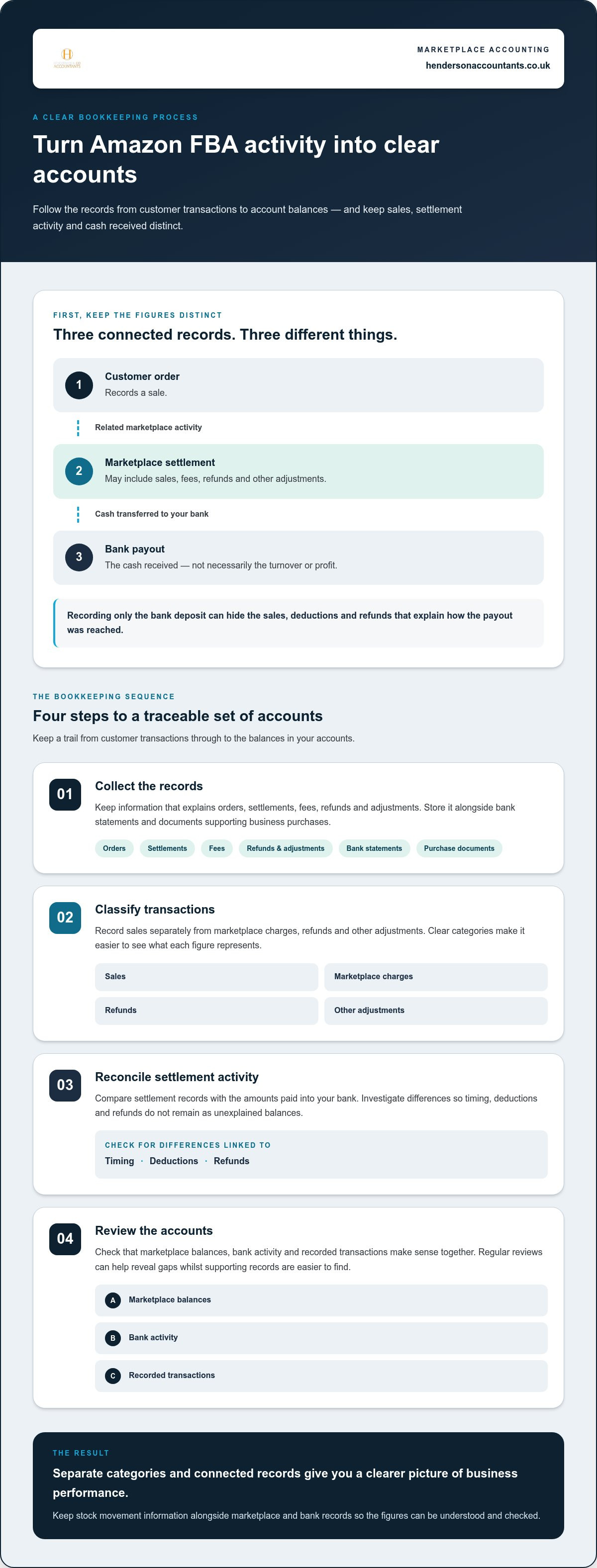
For example, a customer order records a sale, while the related settlement may also include fees, refunds or other adjustments. The payout is the amount transferred to your bank, not necessarily a direct measure of turnover or profit. If you record only that deposit, you can lose the detail needed to explain deductions, track refunds or review performance. An amazon FBA accountant uk sellers work with should help turn these connected records into clear accounts.
What makes Amazon FBA accounting different from basic bookkeeping?
Keep three things distinct: the customer order, the marketplace settlement activity and the cash that reaches your bank. They relate to one another, but they are not the same event. Good bookkeeping retains the records for marketplace fees, refunds and adjustments, alongside information about stock movements, so the figures can be understood and checked.
The details depend on how your business operates. You might use different fulfilment settings, sell through more than one channel or track stock in a particular way. Your accounting process should reflect your actual arrangements, rather than assume every seller’s records look alike. The Institute of Chartered Accountants in England and Wales (ICAEW) provides background on the UK accountancy profession. For FBA accounting, practical understanding of the marketplace activity behind your figures matters too.
When can an FBA seller benefit from accounting support?
There is no single business size or stage at which every seller needs the same level of accounting support. It may be useful when transaction volumes grow, settlement balances are hard to explain, or bookkeeping takes time away from running the business. Clearer reporting can also help you review stock purchasing, pricing or fulfilment plans.
Look for practical signs that your current process is no longer giving you a clear view:
- You can’t easily explain how a payout relates to sales, refunds and deductions.
- Marketplace activity is becoming harder to record consistently across channels.
- You need clearer figures to assess product or business performance.
- You’re unsure whether your records are organised for reporting and compliance work.
Useful accounting support brings the focus back to accurate records and reporting you can use. It should connect day-to-day bookkeeping with relevant compliance needs, based on your business’s circumstances. The aim is a clearer picture and a sound basis for decisions, without unnecessary complexity.
How Amazon FBA bookkeeping turns Seller Central activity into clear accounts
Good bookkeeping creates a trail you can follow from customer transactions to the balances in your accounts. It is easier to maintain when you record and review activity regularly, rather than entering each bank payout as if it were a single sale.
- Collect the records. Keep information that explains orders, settlements, fees, refunds and adjustments, alongside bank statements and documents supporting business purchases.
- Classify transactions. Record sales separately from marketplace charges, refunds and other adjustments. This makes it easier to see what each figure represents.
- Reconcile settlement activity. Compare settlement records with the amounts paid into your bank. Investigate differences so timing, deductions and refunds do not remain as unexplained balances.
- Review the accounts. Check that marketplace balances, bank activity and recorded transactions make sense together. Regular reviews help you spot gaps while the supporting records are easier to find.
A payout is the net cash transferred, not a substitute for recording the activity that contributed to it. For instance, a settlement may reflect sales after fees, refunds or adjustments. Treating the deposit as turnover can hide both the underlying sales and the deductions. Keep the categories separate so your reports give a more useful picture of the business.
Which Amazon records help explain sales and settlements?
Keep records showing what customers ordered, what was included in settlement activity, and which charges, refunds or adjustments affected the amount payable. Store them with bank statements and purchase documents so you can connect marketplace activity to money received and costs incurred. Seller Central report names, layouts and export steps can change. Use the current guidance in your account rather than relying on an old checklist.
How should sellers read profit and inventory information?
Separate revenue from marketplace charges, product costs and other business expenses. This gives you a clearer view of the factors affecting performance, rather than mistaking cash received for profit. Inventory records add context: tracking stock movements helps you understand how purchases, sales and returns relate to the products held by the business. Use records that reflect how you operate, instead of forcing every transaction into a process designed for another seller.
Bookkeeping software can help keep categories and records consistent when it is set up around your business’s actual transactions. It does not remove the need to review how entries relate to settlements, bank activity and stock records. For practical ideas on organising records across online sales, Henderson & Co.’s e-commerce bookkeeping guide explores the wider bookkeeping picture.
For structured support with marketplace records, Henderson & Co.’s eCommerce accounting support can be tailored to your business, including bookkeeping and cloud accounting.
DIY bookkeeping or an Amazon FBA accountant: which support fits your business?
The right level of support depends less on a headline sales figure and more on how manageable your records are, how much time you can give them and what you need the numbers to tell you. You might maintain routine records yourself and bring in an accountant for review, or prefer ongoing specialist support. Choose a process you can maintain consistently.
| Approach | Who maintains records? | Who reviews them? | Decisions it can support |
|---|---|---|---|
| DIY bookkeeping | You record transactions and keep supporting documents. | You check reconciliations, balances and reports. | Day-to-day monitoring, if you understand the figures and have time to maintain the process. |
| General accountant | You may keep records in-house, with the accountant working from the information you provide. | The accountant reviews records for agreed accounting and compliance work. | Year-end accounts and tax reporting, depending on the support arranged. |
| Specialist eCommerce accounting | Records may be maintained by you, supported by bookkeeping, or handled as part of an agreed service. | Support is focused on the needs of marketplace and other online sales activity. | Understanding seller finances and planning around the business’s reporting and operational needs. |
Software can organise information, but it does not guarantee every marketplace transaction has been matched or classified correctly. An automated entry may still need review. If a refund, fee or settlement is recorded in the wrong place, software reports may not reflect the underlying activity. You also need to provide complete business information and retain relevant documents. Professional support can strengthen the process, but accurate business records still depend on the information you provide.
When can a seller manage routine bookkeeping in-house?
In-house bookkeeping can work well when you have a repeatable routine, manageable transaction flows and time to keep records up to date. Set aside time to check reconciliations and file supporting documents, rather than leaving everything until year end. A seller with modest activity may still want help if the records are confusing, while a busier seller may manage routine tasks effectively with a clear process.
What should an eCommerce accountant contribute beyond data entry?
Useful support can include financial oversight and preparing annual accounts, corporation tax returns and VAT returns where relevant. Advice should reflect your business circumstances, rather than assume every seller has the same channels, records or priorities. An amazon FBA accountant uk sellers work with should help explain what the figures show and where further review may be useful. This guide to choosing a UK online business accountant offers further points to consider.
Henderson & Co. provides bespoke eCommerce accounting and bookkeeping support, with cloud accounting for businesses that want to organise their records online. If you’re weighing up the right balance of bookkeeping and review, Henderson & Co.’s eCommerce accounting support can be tailored to your business.
What to organise before working with an Amazon FBA accountant
A clear handover starts with a simple picture of how your business operates and what records are available. You do not need to make every file perfect before getting support. Gathering key information helps an accountant understand your setup, identify gaps and agree how records will be maintained.
Which records should an Amazon seller gather?
Start with two groups: information that explains the business, and recurring records that support bookkeeping. The documents you need depend on your structure and operations, so use this checklist as a practical starting point rather than a universal export list.
- Business details: your business structure, financial year, sales channels and a brief outline of how orders are fulfilled.
- Marketplace records: available sales, settlement, fee, refund and adjustment information for the periods being reviewed.
- Bank records: statements for business accounts, so receipts and payments can be compared with recorded activity.
- Expense evidence: supplier invoices, receipts and other documents supporting business purchases and costs.
- Existing accounts: bookkeeping files, previous accounts and relevant tax or VAT records, if applicable.
- Operational detail: inventory and fulfilment records that reflect how your business tracks stock and handles orders.
Keep recurring records organised as you go, rather than relying on memory at year end. Use clear folders or another consistent filing method, and note what a document relates to if that will not be obvious later. The records you need depend on how your business operates. Keep the information that explains your transactions and supports your accounting work.
How can cloud accounting make collaboration simpler?
A cloud-based process lets you and your accountant work with accounting information online. Henderson & Co. supports clients who prefer to work entirely via the cloud and provides free integration with their chosen bookkeeping software. A dedicated bookkeeper is available 24/7; that availability applies to the bookkeeper, not every service.
Good preparation also helps you agree who will maintain routine records, what information needs regular attention and how questions will be handled. These arrangements can evolve as your sales channels or fulfilment setup changes. For a broader look at the accounting considerations behind online selling, the eCommerce accounting guide for UK sellers provides useful context.
If you’re preparing to change accountants, Henderson & Co. confirms that clients can switch at any time of year with no tax implications. To organise your records and discuss tailored eCommerce accounting support, speak with Henderson & Co. about your bookkeeping needs.
How Henderson & Co. supports Amazon FBA businesses with tailored accounting
Amazon sellers need accounting support that reflects how their business works, from marketplace transactions and bookkeeping through to reporting and compliance. Henderson & Co. provides bespoke eCommerce accounting and cloud accounting support to businesses across the UK. The service is tailored to your circumstances, rather than assuming every seller needs the same package or process.
For an FBA business, that may mean bringing day-to-day records into order and connecting them with the wider accounting work the business needs. An amazon FBA accountant uk sellers work with should help make these responsibilities easier to understand and manage as the business develops.
What does a tailored cloud accounting relationship look like?
Advice is shaped around your business’s circumstances and the way you keep records. You can work entirely via the cloud if you prefer. Henderson & Co. also provides free integration with your chosen bookkeeping software, connecting your bookkeeping process with accounting support. A dedicated bookkeeper is available 24/7; this availability applies specifically to the bookkeeper.
A tailored approach can bring related tasks into view, rather than treating each as a separate job. Depending on your needs, support may include:
- Bookkeeping to maintain organised business records and support review of marketplace activity.
- Xero cloud accounting setup to establish a cloud-based accounting system.
- VAT return preparation where relevant to your business’s circumstances.
- Corporation tax returns and annual accounts to connect year-end reporting with the records maintained through the year.
These responsibilities depend on your business structure, activities and circumstances. Bringing bookkeeping and reporting together can help you see how routine records support later accounting work. Bespoke advice gives you a basis for deciding what suits your business.
If you already work with an accountant, changing support does not have to depend on a particular point in the tax year. Henderson & Co. confirms that clients can switch accountants at any time of the year with no tax implications. Having your existing accounts and bookkeeping information ready can help explain what is in place and what support you need.
How can sellers take the next step with Henderson & Co.?
Start by outlining how your Amazon business operates, how you maintain its records and where you’d value support. You might need regular bookkeeping, cloud accounting setup, year-end accounts or a combination of connected tasks. Henderson & Co. offers simple and cost-effective plans or a fixed monthly fee, with support tailored to your requirements.
To discuss bespoke accounting support for your Amazon business, talk to Henderson & Co. about your accounting needs.
Build accounting support around your next stage of growth
Your accounting setup should help you meet reporting needs and give you a steadier basis for decisions. As your Amazon business changes, the way you organise records and the support you rely on may need to change too. Start by identifying where you want clearer visibility and which tasks you would rather spend less time managing.
Choosing an amazon FBA accountant uk sellers can work with is about finding an approach that fits your business today and can adapt as it develops. A practical first conversation can help you set out your priorities and consider what support suits your circumstances.
Henderson & Co. can help you explore an accounting arrangement shaped around your business. Discuss tailored eCommerce accounting support with Henderson & Co. A clear plan can make the next stage of running your business more manageable.
Frequently Asked Questions
What does an Amazon FBA accountant do?
An Amazon FBA accountant helps sellers organise financial information and complete accounting work that fits their business. An amazon FBA accountant uk sellers work with may review how marketplace activity is recorded, prepare accounts and support relevant tax reporting. They can also explain what the figures show, including how costs affect performance. You still need to provide accurate information about business activity and retain supporting records.
Do I need an accountant to sell on Amazon FBA in the UK?
Every seller’s needs are different, and you may be able to manage routine records yourself if the process is clear and sustainable. Consider accounting support if reconciling activity takes too much time, you’re unsure what your reports mean or you need help preparing accounts and tax returns. The decision should reflect the complexity of your records and the time you can devote to them, not sales volume alone.
How do Amazon FBA settlements affect bookkeeping?
Settlements bring together marketplace activity, so the amount paid into your bank may differ from the sales recorded for that period. If a payout does not match your expected balance, compare its components with the related bank entry and investigate any unexplained difference. Keep notes about corrections or timing differences. This creates a clearer trail to follow later, especially when explaining a figure to your bookkeeper or accountant.
Can I use Xero for Amazon FBA accounting?
Yes, Xero can be used for a seller’s cloud accounting when the bookkeeping process records business activity correctly. Check, for example, that fees and refunds are not grouped as sales simply because they appear alongside settlement information. Henderson & Co. provides Xero cloud accounting setup and free integration with your chosen bookkeeping software. Regular review still matters, as software entries may need checking against source records.
What records should I give an Amazon FBA accountant?
Provide records that explain the period and work involved, such as marketplace activity, business bank statements, expense evidence and existing bookkeeping files. If you’re changing accountants, include previous accounts and relevant tax information so the new accountant can understand what has already been prepared. Add stock or fulfilment information if it helps explain your operations. A short note about unusual transactions can make the records easier to interpret.
Can I change accountants during the tax year?
Yes. Henderson & Co. confirms that clients can switch accountants at any time of the year with no tax implications. To support an orderly handover, gather your current bookkeeping information, previous accounts and details of work already completed or still due. It also helps to explain how you record Amazon activity and who handles each task, so responsibilities are clear from the outset.
How much does an Amazon FBA accountant cost in the UK?
The right arrangement depends on your business and the work involved. Henderson & Co. offers accounting support through simple and cost-effective plans or a fixed monthly fee. To discuss an arrangement suited to your needs, outline your sales channels, bookkeeping process and reporting requirements. This gives you a useful starting point for explaining the support you’re looking for.


