

What if the key to peace of mind for business tax compliance isn’t doing everything yourself, but knowing what needs doing and who’s responsible? Filing dates, record-keeping and HMRC requirements can compete with the work of running and growing your business. A clear process makes those obligations easier to manage.
This guide helps you identify the compliance tasks that may apply to your business, assign responsibility and keep reliable records ready for reporting. You’ll also find practical ways to organise around deadlines and decide when professional support could help, whether your finance workload is becoming more complex or simply taking too much of your time.
We’ll cover how regular bookkeeping supports record readiness, how cloud accounting can make financial information easier to review, and where specialist help with VAT returns, Corporation Tax returns and annual accounts may fit. The aim is a steadier approach, with fewer last-minute scrambles and a clearer view of what comes next.
Key Takeaways
- Peace of mind for business tax compliance starts with knowing which tasks apply and who owns each one.
- Keep receipts, invoices and categorised transactions linked so figures are easier to review and support.
- Choose a mix of software, in-house processes and accountant support that matches your business’s complexity and capacity.
- Use a shared calendar to track obligations, review dates, submissions and named task owners.
- Consider how bookkeeping, Xero setup and support with VAT returns, Corporation Tax returns and annual accounts could help organise your compliance process.
What does peace of mind for business tax compliance actually mean?
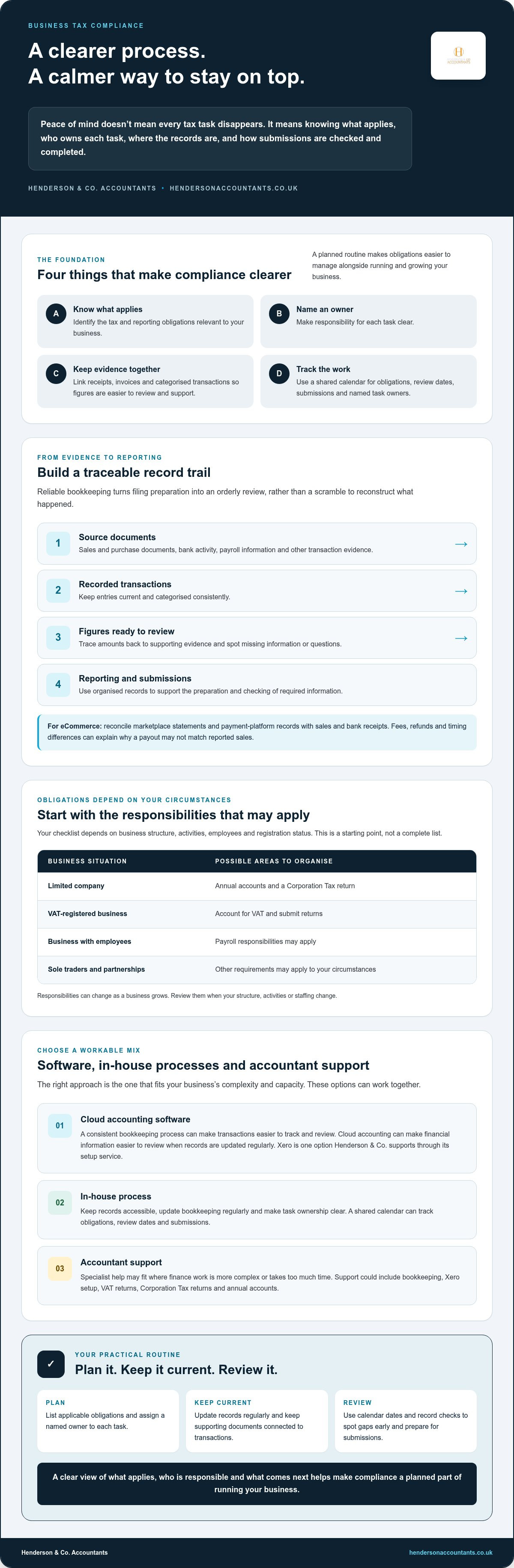
Peace of mind for business tax compliance doesn’t mean every tax task disappears. It means you know what applies to your business, who is responsible for each task, where the supporting records are kept, and how submissions are checked and completed.
Business tax compliance means keeping accurate records, meeting the tax and reporting obligations that apply to your business, and submitting the required information to the relevant authorities.
That’s practical confidence, not a guarantee that errors, HMRC enquiries or changes to rules can never happen. A planned routine helps you spot gaps sooner and respond with better information. Your responsibilities can change as your business grows, so review them when your structure, activities or staffing change.
Which business tax responsibilities commonly need attention?
The right checklist depends on your business structure, activities, employees and registration status. A limited company may need to prepare annual accounts and a Corporation Tax return. A VAT-registered business will need to account for VAT and submit returns. If you employ staff, payroll responsibilities may also apply. Other requirements can apply to sole traders and partnerships.
For more detail, consult dedicated guidance on VAT returns and Corporation Tax. A general overview of the UK corporation tax system can provide background, but check current requirements against official guidance or professional advice for your circumstances.
Why can compliance feel stressful for business owners?
Deadlines can overlap with day-to-day work, and missing invoices or unclear transaction records can make figures harder to prepare with confidence. If information is scattered across inboxes, spreadsheets and accounting software, even routine checks may take longer than expected. Keeping records current gives you more time to identify questions before a filing needs to be completed.
Online sellers may have more information to bring together. Sales, fees, refunds and payouts can appear across different sales channels, so the overall picture may not be clear until these records are reconciled. The details vary by business, so don’t assume another seller’s checklist will fit yours exactly.
A calmer starting point is to list the obligations that apply, name an owner for each task and keep the relevant records together. Once you know what needs attention and when, compliance becomes a planned part of running the business rather than a last-minute scramble.
How do strong records and clear processes support tax compliance?
Reliable records make it easier to check the figures behind a return or set of accounts before they’re prepared. Consistent bookkeeping brings sales, costs and payments into an organised picture, helping you spot missing information, unusual transactions or questions that need answering. It can also make the handover to an accountant clearer and reduce last-minute searching.
Accurate, up-to-date records turn filing preparation into an orderly review instead of a scramble to reconstruct what happened.
There’s a useful chain behind every clear report: source documents support recorded transactions, transactions are categorised consistently, and those entries feed into figures that can be reviewed. A report is more useful when you can trace an amount back to evidence, such as an invoice or payment record. Bookkeeping doesn’t remove the need for judgement, but it gives you a stronger starting point for decisions and checks, supporting peace of mind for business tax compliance.
What records should a business organise for its accountant?
The relevant records vary by business and transaction, so treat this as a starting point rather than a complete list. You may need to organise sales and purchase documents, bank activity, payroll information and other evidence showing how a transaction was recorded. Keep these items somewhere accessible and connect them to the figures in your accounts where possible.
For eCommerce businesses, reconcile marketplace statements and payment-platform records with sales and bank receipts. Payout totals may reflect fees, refunds or timing differences, so keeping a clear trail helps explain why a bank receipt may not match reported sales. For more practical guidance, see this eCommerce bookkeeping guide for UK sellers.
How can accounting software improve visibility?
A consistent cloud bookkeeping process can make transactions easier to track and review, especially when records are updated regularly rather than gathered just before a filing. Xero is one cloud accounting option Henderson & Co. supports through its setup service. Software can organise financial information, but it can’t confirm on its own that every transaction is complete or categorised correctly. Someone still needs to review the inputs and use judgement.
If you want to understand broader tax topics, the ICAEW tax resources provide professional guidance and reference material. For a more joined-up approach to day-to-day records, you could also explore bookkeeping and Xero setup support from Henderson & Co.
Accountant, software or in-house process: which approach brings more confidence?
There isn’t one setup that suits every business. The right fit depends on your team’s expertise, how clearly tasks are owned, how easily you can see what’s happening and whether there’s enough time to keep the process running. Software, internal processes and accountant support can work separately or together.
- Software: helps organise information and makes figures easier to review, but it can’t judge whether inputs are complete or decisions are correct.
- In-house process: gives you direct visibility and control, provided someone has the time and knowledge to keep records current and tasks on track.
- Accountant support: adds specialist capacity. An accountant can prepare and submit agreed returns using information you provide, with the scope and approval process agreed between you.
External support doesn’t transfer a director’s responsibilities or guarantee error-free outcomes. You still need to provide complete information, review what’s prepared and understand who approves submissions. Knowing what may happen during HMRC tax compliance checks can also help you understand why organised records and clear communication matter.
When might accounting software and internal processes be enough?
Managing compliance in-house may be practical if your transactions are straightforward, records are easy to maintain and someone consistently handles checks and deadlines. Ask yourself: are bank and sales figures reconciled regularly? Are queries resolved promptly? Does a named person know what needs doing next?
If tasks keep slipping, or rising transaction volumes make reviews harder to complete, your current approach may need to change. Software can improve visibility, but it won’t create capacity on its own.
When could specialist accountant support be useful?
Consider additional expertise if obligations are changing, your team has limited finance capacity or your eCommerce activity spans several sales channels. A specialist can help you understand what information is needed and support agreed work such as bookkeeping, VAT return preparation or Corporation Tax returns.
Set expectations early. Confirm the work included, the records you need to provide, key dates, who reviews the figures and who approves submissions. That clarity makes support useful and reduces uncertainty at handover. For more guidance, read this guide to choosing a UK online business accountant.
The right combination can build peace of mind for business tax compliance without asking you to surrender oversight. If you’re weighing up help with bookkeeping or eCommerce accounting, you can explore Henderson & Co.’s accounting support as one option.
How can you build a practical business tax compliance routine?
A useful routine turns compliance into a series of visible tasks instead of a rush to piece everything together before a deadline. Start by listing the obligations that apply to your business, then assign an owner, organise the records, review the figures and confirm each submission has been made. Treat this as a working process, not a complete legal checklist: requirements vary and can change.
How should you map deadlines and responsibilities?
Create a shared calendar with filing dates, internal review dates and reminders to gather information. For each return, set of accounts or company filing, record who prepares it, who checks it and who submits it. Confirm current deadlines and requirements with HMRC or a qualified adviser before relying on the calendar.
Make ownership clear on both sides. An accountant may prepare agreed filings, but you’ll still need to provide complete information and review or approve figures where required. Note what’s outstanding and who is following it up, so tasks don’t disappear between handovers.
A simple workflow could look like this:
- Map: list the returns, accounts and company filings relevant to your business.
- Assign: name the person responsible for preparing, reviewing and submitting each item.
- Organise: keep supporting records in an agreed place and note any missing information.
- Review: check figures and resolve questions before they reach the filing deadline.
- Confirm: record when a submission is complete and retain relevant confirmation.
Build in time for review and queries rather than scheduling every task for the final due date. The lead time you need depends on your records, workload and any agreed arrangements with an adviser.
How can you check whether your process is working?
Look for patterns, not just whether a filing was completed. Is bookkeeping kept up to date? Are key accounts and sales records reconciled? Do you regularly receive information late, correct the same figures more than once or find that nobody is sure who owns a task? These are signs that responsibilities, timing or record collection may need attention.
Review the routine when your business changes, for example, when sales channels or staffing grow. For Corporation Tax detail, see this UK Corporation Tax guide. If you’d like help organising bookkeeping or compliance tasks, explore Henderson & Co.’s accounting support.
How can Henderson & Co. support peace of mind for business tax compliance?
Professional support can help turn financial information into organised records and agreed filing tasks. Henderson & Co. provides VAT return preparation, Corporation Tax returns and annual accounts, alongside bookkeeping and Xero cloud accounting setup. These services may help if finance administration is taking too much of your time or your sales and reporting have become more complex.
Bookkeeping helps keep financial information organised as transactions happen. Xero setup can provide a structured place for that information, while clear processes make it easier to review and share. Neither software nor an accountant can replace your judgement or involvement. You’ll still need to provide complete information, respond to questions and review figures or approve submissions where required.
For businesses with limited internal finance capacity, outsourced finance department support can provide operational help suited to the work agreed. It should complement your involvement, not leave you uncertain about what’s happening or who is responsible. Clarity around scope and communication is central to building peace of mind for business tax compliance.
What compliance support can an accountant provide?
An accountant can support the preparation and submission of agreed VAT and Corporation Tax returns using the records and information you provide. Depending on your business needs, annual accounts and company secretarial services may also be relevant. Before work begins, agree which tasks are included, what information you need to supply, who reviews the figures and who confirms a submission.
What should you ask before choosing compliance support?
A short discussion can help you see whether the support fits your business. Ask:
- Which returns, accounts or company filings are covered, and which remain your responsibility?
- What records and information will you need to provide, and when?
- How are queries raised and resolved, and who approves figures before submission?
- How will bookkeeping and cloud accounting fit with the review process?
- Could the support accommodate your current workload and likely business changes?
The answers should give you a clear picture of the handover and your role in it. You don’t need to have every process perfected before asking for help. Start by discussing how your business currently manages its records and obligations, where the pressure points are and what support would make the workload more manageable. Discuss your business tax compliance support with Henderson & Co.
Build a clearer path to tax compliance
Peace of mind for business tax compliance comes from knowing what applies, keeping records organised and giving each task a clear owner. Regular reviews help you spot missing information and prepare for filing deadlines, while the right mix of software, internal processes and professional support can make finance administration more manageable.
Henderson & Co. specialises in eCommerce accounting for UK online businesses, with services including VAT returns, Corporation Tax returns, annual accounts and bookkeeping. If your sales channels, workload or reporting needs have grown, support with these areas may help you create a clearer process. You’ll still stay involved, with responsibilities and approvals agreed between you and your accountant.
Take the next step by discussing your current records, obligations and where you’d value extra support. Talk to Henderson & Co. about making business tax compliance more manageable. With a practical routine and the right support in place, you can approach your responsibilities with greater clarity and focus on growing your business.
Frequently Asked Questions
What does peace of mind for business tax compliance mean?
Peace of mind for business tax compliance means knowing which obligations apply, who is handling each task and where the supporting records are kept. It comes from a repeatable process for keeping information current, reviewing figures and tracking submissions. It doesn’t mean errors, enquiries or changes to rules are impossible. Instead, an organised approach helps you identify questions sooner and know what needs attention.
Can an accountant guarantee that my business is tax compliant?
No accountant can guarantee that a business will be error-free or that HMRC will never make an enquiry. An accountant can prepare and submit agreed returns using the information you provide, but the work depends on records being complete and accurate. Agree the scope, information you need to supply, review steps and approval responsibilities before work begins. Stay involved, and check current requirements with HMRC or a qualified adviser.
How can a small business stay on top of tax compliance?
Keep a current list of applicable filings and accounts, assign an owner to each task and use a shared calendar for deadlines, reminders and review dates. Update bookkeeping regularly and gather supporting documents as transactions happen, rather than leaving everything until a filing is due. Check that figures are reviewed and submissions confirmed. The right routine depends on your business structure, activities, employees and registration status.
Does accounting software make a business tax compliant?
No. Accounting software can help organise financial information and make transactions easier to track, but it can’t guarantee that records are complete, figures are correct or every obligation has been met. Someone still needs to review entries, resolve discrepancies and make informed decisions. A cloud accounting system works best as part of a clear process, with named task owners and regular checks that suit the business.
What records should I keep for business tax compliance?
Relevant records depend on your business and the transactions involved. You may need sales and purchase documents, bank activity, payroll information and evidence supporting how transactions were recorded. Online sellers may also need to reconcile marketplace statements and payment-platform records with sales and bank receipts. Keep information organised and accessible, and ask HMRC or a qualified adviser what records apply to your circumstances.
When should a business get help with tax compliance?
Consider professional support if you’re unsure which obligations apply, deadlines are becoming difficult to manage or bookkeeping is regularly falling behind. It may also help when transaction volumes grow, sales channels become more complex or your team has limited finance capacity. Before engaging an accountant, clarify which filings are included, what information you must provide, how reviews work and who approves submissions.
Who is responsible for a company’s tax compliance?
The company has obligations to meet, and its directors need to oversee how the company’s financial and filing responsibilities are managed. Hiring an accountant to prepare or submit agreed returns doesn’t remove the need for directors to provide complete information, review figures and approve work where required. For a sole trader, responsibilities may differ. Confirm who owns each task and check current requirements for your business structure.
Can an accountant help an eCommerce business manage tax compliance?
Yes. An accountant with eCommerce experience can help organise bookkeeping and support agreed compliance work, such as VAT return preparation, Corporation Tax returns and annual accounts. Online businesses may need to bring together sales, fees, refunds and payouts from different marketplaces or payment platforms. Henderson & Co. specialises in eCommerce accounting and Xero cloud accounting setup, with support shaped by the business’s needs and agreed responsibilities.


